
Sunday, August 09, 2009
Another Oak
Simon Whipple, visiting with his sons and walking down to the river with Roy, found another knee high oak not far from the other one, on the south slope of the knoll with the dead tree. Seriously, we are going to need a working party for fencing before the winter.

Wednesday, August 05, 2009
Some Ideas
It is pretty clear that, whatever happens, the wood will not just stay as it is now. The question for us is to what extent we intervene in its development. I must say, I am pulled two ways: regenerating the ancient woodland; and dropping choice exotics into it. I wonder if both can be done; and I suppose they can, if one is fairly rigorous about where the dropping is done.
Of course, there are huge temptations: draping clematis or climbing hydrangeas or climbing roses over dead stumps; introducing perennial flowering plants into the woodland: aquilegias, geraniums in the open spaces, astrantia, anemone; putting the odd exotic tree or shrub under the protection of the tree cover: rhododendrons, mainly; and adding exotic trees: liriodendron, swamp cypress, whatever else might survive the long and sometimes harsh, but perhaps less harsh than formerly, winters.
Then there is the temptation of growing things to eat, particularly soft fruit.
Obviously, we have already interfered with the landscape quite a lot. So I don't feel embarrassed at the idea of trying some of the wild daffodil types in a drift on one of the raw banks, or putting an exotic tree or shrub near the house.
I have mentioned bog plants for the places where raw peat has been exposed. I am also wondering what might survive on the dry banks. Miniature wild magenta gladioli, anyone?
Any ideas or opinions out there?
Of course, there are huge temptations: draping clematis or climbing hydrangeas or climbing roses over dead stumps; introducing perennial flowering plants into the woodland: aquilegias, geraniums in the open spaces, astrantia, anemone; putting the odd exotic tree or shrub under the protection of the tree cover: rhododendrons, mainly; and adding exotic trees: liriodendron, swamp cypress, whatever else might survive the long and sometimes harsh, but perhaps less harsh than formerly, winters.
Then there is the temptation of growing things to eat, particularly soft fruit.
Obviously, we have already interfered with the landscape quite a lot. So I don't feel embarrassed at the idea of trying some of the wild daffodil types in a drift on one of the raw banks, or putting an exotic tree or shrub near the house.
I have mentioned bog plants for the places where raw peat has been exposed. I am also wondering what might survive on the dry banks. Miniature wild magenta gladioli, anyone?
Any ideas or opinions out there?
Saturday, August 01, 2009
Monday, July 27, 2009
End of July
Diana and Martin have been here. Diana has removed parts of the stumpery in the bog and so we have been inspired to remove some more. We found a few little blaeberry plants in among the roots; and I have replanted them just outside the study window. I have also planted near there an olearia macrodonta like the one which Janet gave me years ago and which is now huge and very beautiful. The ground beneath the six inches of peat put there by the builders, taken, as I believe I may have said before, from our beautiful peat meadow grrr, is a mixture of orange sand and stones. I have no idea if this is indigenous or builders' waste. I will be interested to see how it operates as a growing medium.
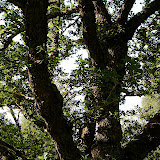
When we took D and M for the usual walk around we had the greatest excitement of finding a huge bush of knee high oak, far down towards the river just to the side of the knoll with the dead tree. The oak is either one sprawling or several not sprawling seedlings, very thoroughly bonsaied by deer. It is eight feet by six feet across and about two feet high. We are amazed that we have not seen it before; but, really, you don't expect to see an oak tree imitating the action of bog myrtle. This is a fencing priority.
Diana and Roy waded across to one of the little islands in the river, as the water was so low, and found three alders there. Rather fairy taleish I feel. Otherwise, we just noticed trees and plants and we sat on rocks in the burn and fantasised about what the Victorians would have done with the ravine. Well, I did.
On Sunday we went to have lunch at the Invergarry Castle Hotel, a very civilised place, because we had to buy some milk. We went for a walk in the grounds which are decayed gentility: lots of big oaks and beeches; the remains of gardens; terraces; gunneras; a whole pond full of arum lilies; and dozens and dozens of oak seedlings. Oh how my trowel finger itched.
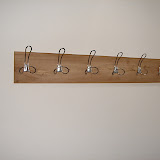
I have been taking pictures which will be posted when I can find the intellectual energy. They include some interiors because I have been asked for them. The study is now useable as such; we have moved the sofa to the place where a second one might be put. And the builders have done various things such as fixing the lights which I don't much like over the table (and breaking one of them). The table is really too short for three lights. They have also put up our ingenious American coathooks as yet unavailable here. (Thank you, Max.) The pictures will be there to prove it.
When we took D and M for the usual walk around we had the greatest excitement of finding a huge bush of knee high oak, far down towards the river just to the side of the knoll with the dead tree. The oak is either one sprawling or several not sprawling seedlings, very thoroughly bonsaied by deer. It is eight feet by six feet across and about two feet high. We are amazed that we have not seen it before; but, really, you don't expect to see an oak tree imitating the action of bog myrtle. This is a fencing priority.
Diana and Roy waded across to one of the little islands in the river, as the water was so low, and found three alders there. Rather fairy taleish I feel. Otherwise, we just noticed trees and plants and we sat on rocks in the burn and fantasised about what the Victorians would have done with the ravine. Well, I did.
On Sunday we went to have lunch at the Invergarry Castle Hotel, a very civilised place, because we had to buy some milk. We went for a walk in the grounds which are decayed gentility: lots of big oaks and beeches; the remains of gardens; terraces; gunneras; a whole pond full of arum lilies; and dozens and dozens of oak seedlings. Oh how my trowel finger itched.
I have been taking pictures which will be posted when I can find the intellectual energy. They include some interiors because I have been asked for them. The study is now useable as such; we have moved the sofa to the place where a second one might be put. And the builders have done various things such as fixing the lights which I don't much like over the table (and breaking one of them). The table is really too short for three lights. They have also put up our ingenious American coathooks as yet unavailable here. (Thank you, Max.) The pictures will be there to prove it.
General Notes about what is appearing and what I have planted
Somewhat remiss in the blog-writing recently. Well, not so recently, actually, I see. It is a problem, writing things about a building project when it has virtually ended. All I really have is the report of three months’ worth of wild flowers, which I find interesting, but which may seem dull to some, plus a discussion of trees and one visit to Alasdair about snagging.
Simply in the interests of recording what I may later find has died on me, I note that I have moved some plants from St Andrews and put them at the top of the bank on the south side of the house. So far there are these: the small scented jonquil-like daffodils with slightly twisted petals and a small cup; iris reticulata; erythronium revolutum; narcissus Tete a Tete; iris Katherine Hodgkin, a spectacular spring-flowering miniature; ranunculus aconitifolius plenus, the double white buttercup; some hybrid geranium renardii which have not come out in that lovely grey colour of flower, as they are hybrids; and astrantia. Mike has let me take a root of golden oreganum from Tomdoun. I have also sown some seeds of orleya grandiflora, given me by Gardens Illustrated, and some aquilegia seeds from St Andrews. At the back of the house, on the bank, I have sown some white foxgloves, also from GI. Beside the track, I have cast a weird collection of seeds given by someone. They include cornflower, achillea, some sort of daisy flower, poppies and more aquilegias. In the difficult area in front of Klarg I have buried a thank you letter impregnated with wildflower seeds. Heaven knows what will come up; it felt like an odd thing to do.
The wild flowers already in residence have gone through several waves since I last wrote. Bluebells, wood anemones, wood sorrel and violets gave way to chickweed wintergreen, orchids, tomentil and cinquefoils. (I know the difference, I think.) There is also tick wort, milkwort and those succulent bog flowers that I can’t look up because the wildflower books are elsewhere. Now the bog asphodel has come out in huge swathes, very noticeably behind the house, where it makes a harmonious sweep of yellow surrounded by lines of the different greens of grass, bog myrtle and bracken. Things here seem to go in for monoculture.
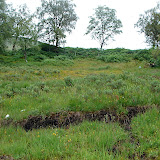
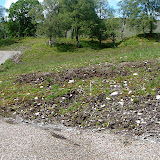
The bare banks are greening up reasonably well. Livy has posted some pictures taken several weeks ago which show this; and I am taking some more this weekend. Except in the areas immediately beside the house, where the builders put a layer of peat taken from the meadow, over the brickbats and pieces of wire which I fully expect to find down there one day, the bare earth has had two summers to recover. It is doing particularly well in the place where the original track to the meadow was made and then abandoned. The back of the quarry and the sides of the track are not doing too badly; the banks to the north and south of the house are starting to recover, except the place to the north which is pure scree. The only really slow bit is the long barrow of subsoil up the slope behind the north bank.
Simply in the interests of recording what I may later find has died on me, I note that I have moved some plants from St Andrews and put them at the top of the bank on the south side of the house. So far there are these: the small scented jonquil-like daffodils with slightly twisted petals and a small cup; iris reticulata; erythronium revolutum; narcissus Tete a Tete; iris Katherine Hodgkin, a spectacular spring-flowering miniature; ranunculus aconitifolius plenus, the double white buttercup; some hybrid geranium renardii which have not come out in that lovely grey colour of flower, as they are hybrids; and astrantia. Mike has let me take a root of golden oreganum from Tomdoun. I have also sown some seeds of orleya grandiflora, given me by Gardens Illustrated, and some aquilegia seeds from St Andrews. At the back of the house, on the bank, I have sown some white foxgloves, also from GI. Beside the track, I have cast a weird collection of seeds given by someone. They include cornflower, achillea, some sort of daisy flower, poppies and more aquilegias. In the difficult area in front of Klarg I have buried a thank you letter impregnated with wildflower seeds. Heaven knows what will come up; it felt like an odd thing to do.
The wild flowers already in residence have gone through several waves since I last wrote. Bluebells, wood anemones, wood sorrel and violets gave way to chickweed wintergreen, orchids, tomentil and cinquefoils. (I know the difference, I think.) There is also tick wort, milkwort and those succulent bog flowers that I can’t look up because the wildflower books are elsewhere. Now the bog asphodel has come out in huge swathes, very noticeably behind the house, where it makes a harmonious sweep of yellow surrounded by lines of the different greens of grass, bog myrtle and bracken. Things here seem to go in for monoculture.
The bare banks are greening up reasonably well. Livy has posted some pictures taken several weeks ago which show this; and I am taking some more this weekend. Except in the areas immediately beside the house, where the builders put a layer of peat taken from the meadow, over the brickbats and pieces of wire which I fully expect to find down there one day, the bare earth has had two summers to recover. It is doing particularly well in the place where the original track to the meadow was made and then abandoned. The back of the quarry and the sides of the track are not doing too badly; the banks to the north and south of the house are starting to recover, except the place to the north which is pure scree. The only really slow bit is the long barrow of subsoil up the slope behind the north bank.
Visit from the Tree Man
I have mentioned Graham Tuley before. His second visit deserves a separate posting and I only hope I can remember all his advice. It was a jolly hot day and we walked around looking at trees and discussing management strategies until I was bushed. And then we did it again after lunch.
Graham is a forester of standing, now retired. We don’t know the full extent of his expertise; but we accept it as far beyond what we will ever have the capacity to benefit fully from, if you get my drift. For us, it is the regenerating old woodland aspect that is important.
We made the beginnings of an inventory: pretty much the species that I have mentioned before. What we should be trying to encourage are the oaks and hazels, which are old; and only the hazels seem to be putting out seedlings. Birch doesn’t really need much encouragement, though it would be nice to see some young ones getting beyond bonsai size. We should try to get the right variety of Scots pine to gain or regain a foothold.
There is a lot of erudite stuff about Scots pines which I have somewhat forgotten, taking away from it the memory of the name of a book, which Roy has written down somewhere, and the fact that Scots pines have various varieties (sub-species?) that appear only in very restricted areas. The Knoydart pines at Runival and Barrisdale are completely different from the ones in Glengarry. There is a pocket of very ancient trees indeed just over the hill from the Wood in the direction of Loch Loyn. Apparently, it is important not to interfere with the speciation and geographical speciality, so we must be careful to take seeds for our pines from old trees in Glengarry, and not planted ones.
In general, we should be putting trees where bracken flourishes – no point in even thinking of doing anything in the bogs. I am reasonably content with that, though I shall probably try the odd willow in the bog – acceptable as it is a native tree, and taxodium, to see if it grows knees. This is markedly not acceptable, or perhaps just marginally so if placed near the house. I am not to plant a Wellintonia. (Mutinous muttering – but I might just conceivably get away with it in an overtly gardened place.
We also discussed deer management. The new approach seems to be to try cohabitation. Donald the ghillie at Kinlochhourn would like this, too. We should try to set out easy routes through the wood from top to bottom, and otherwise do a little topical fencing in small areas. Deer don’t like what I believe is called an in-and-out in show jumping. So an enclosure only a few metres across will discourage them. As Esther noticed, just a plain piece of wire fencing may discourage them if a seedling tree is tangled up in it.
There are other odd places where trees are regenerating – a little stand of alders up quite near the top of the west burn, for example, where an angle of fencing makes a sort of nook, not actually enclosed, but just sufficiently discouraging to keep the deer off.
Graham is keen on growing from seed and so we will be keenly collecting bird cherry seeds and rose hips as well as pine cones, and making natty little wire entanglements for them. Hours of innocent pleasure.
Graham is a forester of standing, now retired. We don’t know the full extent of his expertise; but we accept it as far beyond what we will ever have the capacity to benefit fully from, if you get my drift. For us, it is the regenerating old woodland aspect that is important.
We made the beginnings of an inventory: pretty much the species that I have mentioned before. What we should be trying to encourage are the oaks and hazels, which are old; and only the hazels seem to be putting out seedlings. Birch doesn’t really need much encouragement, though it would be nice to see some young ones getting beyond bonsai size. We should try to get the right variety of Scots pine to gain or regain a foothold.
There is a lot of erudite stuff about Scots pines which I have somewhat forgotten, taking away from it the memory of the name of a book, which Roy has written down somewhere, and the fact that Scots pines have various varieties (sub-species?) that appear only in very restricted areas. The Knoydart pines at Runival and Barrisdale are completely different from the ones in Glengarry. There is a pocket of very ancient trees indeed just over the hill from the Wood in the direction of Loch Loyn. Apparently, it is important not to interfere with the speciation and geographical speciality, so we must be careful to take seeds for our pines from old trees in Glengarry, and not planted ones.
In general, we should be putting trees where bracken flourishes – no point in even thinking of doing anything in the bogs. I am reasonably content with that, though I shall probably try the odd willow in the bog – acceptable as it is a native tree, and taxodium, to see if it grows knees. This is markedly not acceptable, or perhaps just marginally so if placed near the house. I am not to plant a Wellintonia. (Mutinous muttering – but I might just conceivably get away with it in an overtly gardened place.
We also discussed deer management. The new approach seems to be to try cohabitation. Donald the ghillie at Kinlochhourn would like this, too. We should try to set out easy routes through the wood from top to bottom, and otherwise do a little topical fencing in small areas. Deer don’t like what I believe is called an in-and-out in show jumping. So an enclosure only a few metres across will discourage them. As Esther noticed, just a plain piece of wire fencing may discourage them if a seedling tree is tangled up in it.
There are other odd places where trees are regenerating – a little stand of alders up quite near the top of the west burn, for example, where an angle of fencing makes a sort of nook, not actually enclosed, but just sufficiently discouraging to keep the deer off.
Graham is keen on growing from seed and so we will be keenly collecting bird cherry seeds and rose hips as well as pine cones, and making natty little wire entanglements for them. Hours of innocent pleasure.
Thursday, July 16, 2009
Monday, May 18, 2009
May flowers
We were at the Wood with Ursula last weekend; and she took lots of lovely pictures of flowers with her smart camera. We have chickweed wintergreen, lots of proper bluebells (hyacinthoides non-scripta, not the Spanish sort), violets, lousewort, milkwort and anemones both white and pink. Also wood sorrel, which Ursula spotted and I didn't. The bluebells have the true dark blue, accentuated by dark stems.They tend to impress as a sort of shadow, rather than a solid colour, which is what the more blowsy Spaniards do.
There are lots of rowan seedlings, so we instituted a search for parents, which we found quite far away at the eastern side, not far from the stream. There are also alders which I had not found before, most noticeably down at the bottom of the east burn. They are quite old, and I didn't see many cones on them; but as the photographs show, they have the distinctive alder leaf shape. Ursula noticed another oak on the far side of the east burn. I went on a walk right up the land over on the far side of that burn, a thing I hadn't done before; but I couldn't find any oak seedlings there. We now have five oaks.
Graham Tuley the noted tree man, whom we met on Loch Hourn a couple of years ago (he advises Kinlochhourn Lodge on forestry matters) had most genially agreed to come to lunch and look at the wood with a view to advising us on its management; but we arrived late on Saturday morning, and missed him. Black mark.
He looked around the wood without us, though, and he was kind enough to give some advice by telephone. He suggests we should spend a few seasons observing some marked seedlings, measuring them in the spring and autumn, to see if our presence in the wood is disturbing the deer enough to warn them off the seedlings. I suspect we are not there often enough at present to have much effect. Probably we will have to fence. He thinks we should have a try at establishing more oaks in the places where bracken and blaeberries grow at present, and also that we should try reintroducing Scots pines, of which there are none at present. He thinks they were there in the past, as chickweed wintergreen grows with pines.
He also said we should not cut down the dead tree trunks as there are woodpeckers in them. We went and looked and lo there were holes and places where woodpeckers had been after grubs. So maybe I shall use some of the dead trunks for growing things on.
There are lots of rowan seedlings, so we instituted a search for parents, which we found quite far away at the eastern side, not far from the stream. There are also alders which I had not found before, most noticeably down at the bottom of the east burn. They are quite old, and I didn't see many cones on them; but as the photographs show, they have the distinctive alder leaf shape. Ursula noticed another oak on the far side of the east burn. I went on a walk right up the land over on the far side of that burn, a thing I hadn't done before; but I couldn't find any oak seedlings there. We now have five oaks.
Graham Tuley the noted tree man, whom we met on Loch Hourn a couple of years ago (he advises Kinlochhourn Lodge on forestry matters) had most genially agreed to come to lunch and look at the wood with a view to advising us on its management; but we arrived late on Saturday morning, and missed him. Black mark.
He looked around the wood without us, though, and he was kind enough to give some advice by telephone. He suggests we should spend a few seasons observing some marked seedlings, measuring them in the spring and autumn, to see if our presence in the wood is disturbing the deer enough to warn them off the seedlings. I suspect we are not there often enough at present to have much effect. Probably we will have to fence. He thinks we should have a try at establishing more oaks in the places where bracken and blaeberries grow at present, and also that we should try reintroducing Scots pines, of which there are none at present. He thinks they were there in the past, as chickweed wintergreen grows with pines.
He also said we should not cut down the dead tree trunks as there are woodpeckers in them. We went and looked and lo there were holes and places where woodpeckers had been after grubs. So maybe I shall use some of the dead trunks for growing things on.
Tuesday, May 12, 2009
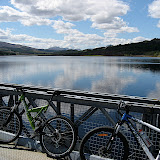
Livy and Andrew's visit
 |
| Livy and Andrew go for a bike ride |
In blazing sunshine and warm-enough-for-t-shirts weather.
PS Notice the new spring-like photo at the top of the blog :)
Wednesday, May 06, 2009
Flowers and ditching
 |
| Ditches and flowers |
We went to the Wood last weekend, and were looking for signs of advancing spring. Perthshire was lush and as green as Fife. From Laggan, along to Spean Bridge, the green was not as bright, probably because of the altitude. At the Wood, things were still looking a little wintry, as there is a fair amount of dead bracken and molinia straw and the bog myrtle is still brown, but it was better than the upper parts of the A9 and the Spean Bridge road. The birches were green, though their leaves were still very small; the stubby grass was nice and bright and coming on well, and even the new molinia leaves were pushing up through the old straw. Some of the new banks and barrows around the house were beginning to green up in clumps.
Roy hauled more logs out of the bog, and then got usefully side-tracked into digging out part of the Allt na Minion. I went to look for flowers over by the west burn and in the wood. No chickweed wintergreen or orchids yet; but there are a few violets, plenty of bluebell leaves, lots of anemones, mostly white but some pink, and some bright pink self-heal. I saw one milkweed in the hither side of the bog, and one bluebell in the wood near the hazel. There are lots of tiny new birches and rowans which it would be nice to save from the deer.
The pond developing itself on part of the route of the Klarg pipe is quite seriously deep. I have decided to put a thoroughly alien gunnera there with yellow wild irises, skunk cabbage (which I saw growing wild near Seattle) and candelabra primulas. We wonder if there may actually be a spring there, supplying that persistent wetness. It may have been disturbed when rocks were dug up as the pipe was laid.
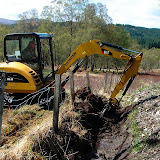
On Sunday morning, quite out of the blue, Donald Cameron arrived, along with Fred from Inchlaggan, with the digger. As I was writing this, he was working down the ditch beside the middle fence, hauling out great slabs of peat and vegetation, laying them neatly in the bog, bashing them down slightly to lay them flat. The idea is to drain the east side of the bog below the house into the Allt na Minion, and then to improve the course of that burn. The machine is too big to do a drain for the bit that I fell in up to the top of my boots in the snow; but Roy will do that with a spade.
Monday, April 20, 2009
Daffodils
Has there been a revolution in the daffodil world?
We have become particularly interested in them, as we have been told that they are vegetables of which the deer not bites. (Quotation, sort of; look it up.) But when I went to the Peter Nyssen website I was surprised and perturbed to discover that they do not sell bulbs for autumn planting. Surely that used to be what one did? Have I read the information wrongly? If it is true, we have missed a whole season. Grinding of teeth, flashing of eyes, general appearance of samurai in frightening 19th century Japanese print. Ah - no. Thank you, Janet. I have misread it. But now I am perturbed because Nyssens don't have the exact daffodils I want. So there may be some transplanting of the ones we have in St Andrews.
When we manage to get some, I rather favour the wild sorts, and also jonquils, which we have flowering at St Andrews now. They smell gorgeous.
I am off to check whether there are other plants disliked by deer. I think there is a list of reasonably deer proof plants in the Glendoick book.
We have become particularly interested in them, as we have been told that they are vegetables of which the deer not bites. (Quotation, sort of; look it up.) But when I went to the Peter Nyssen website I was surprised and perturbed to discover that they do not sell bulbs for autumn planting. Surely that used to be what one did? Have I read the information wrongly? If it is true, we have missed a whole season. Grinding of teeth, flashing of eyes, general appearance of samurai in frightening 19th century Japanese print. Ah - no. Thank you, Janet. I have misread it. But now I am perturbed because Nyssens don't have the exact daffodils I want. So there may be some transplanting of the ones we have in St Andrews.
When we manage to get some, I rather favour the wild sorts, and also jonquils, which we have flowering at St Andrews now. They smell gorgeous.
I am off to check whether there are other plants disliked by deer. I think there is a list of reasonably deer proof plants in the Glendoick book.
Sunday, March 15, 2009
Walking in the Wood
Some people believe that when we live at the Wood our brains will atrophy and we will have nothing to do except sit around vacuously staring at the view. In fact, there are plenty of things to do, both intellectual and physical.
The physical things are fairly easy to list: collecting wood; sawing logs; ditching; walking around diligently exercising heart and muscle, which is what I did yesterday (pictures below). Today, we opened our pores for an hour and a half, throwing and dragging logs and branches from just up the hill to the wood pile. This has the satisfying effect of tidying the landscape as well as supplying fuel.
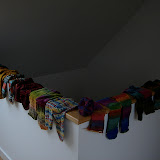
Indoors, I knit (pictures below of some of the twenty pairs of socks I have knitted this year – not all at the Wood) and do tapestry. Well, all of that is fairly mindless, though it leaves time to think other thoughts, some of which involve planning physical things: the location of more ditches; the delineation of paths (not actually making them, but finding ways of indicating preferred routes, such as by cutting the bracken, or identifying the convenient places to sit, which form markers along the way); where to place trees and other plants.
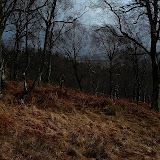
My walk yesterday was what I now regard as my favourite short circuit round the upper and middle part of the wood. It takes a fairly direct route to the eastern burn, and then along a prominent ridge parallel to the burn and overlooking it. There is another oak tree on this ridge, and hazels below it beside the burn, where there is a space between the bottom of the ridge and the burn itself which I am sure the Victorians would have turned into a lovely path, with interesting planting. There are plenty of knolls with boulders to sit on, and plenty of places demanding interesting specimens of tree or rhododendron. The ridges of moraine which run down the slope at intervals (usually with boggy bits between them) make for a great variety of views and visual possibilities.
Which leads us on to fencing, when we can afford it.
Ditching also came to the fore this weekend, as Donald Cameron, the ghillie from Kinlochhourn, came to talk about putting his machines to our rather silted up ditch, and to making new drainage in our wasteland, where I disappeared to the tops of my boots a few weekends ago, and had to be rescued by Livy It is always interesting talking to him.
And then the intellectual things. Why should we do less than we do at present? We don’t go to the theatre or concerts much – I don’t know why. We read, we write, we listen to music. Roy reminds me that when the Ellice family had Quoich Lodge (this was in the early years of the last century) they made it a centre of intellectual and cultural life, visited there by artists, writers, statesmen and the lions of their time. There’s a project for us.
The physical things are fairly easy to list: collecting wood; sawing logs; ditching; walking around diligently exercising heart and muscle, which is what I did yesterday (pictures below). Today, we opened our pores for an hour and a half, throwing and dragging logs and branches from just up the hill to the wood pile. This has the satisfying effect of tidying the landscape as well as supplying fuel.
 |
| Walking in the wood |
 |
| Socks |
My walk yesterday was what I now regard as my favourite short circuit round the upper and middle part of the wood. It takes a fairly direct route to the eastern burn, and then along a prominent ridge parallel to the burn and overlooking it. There is another oak tree on this ridge, and hazels below it beside the burn, where there is a space between the bottom of the ridge and the burn itself which I am sure the Victorians would have turned into a lovely path, with interesting planting. There are plenty of knolls with boulders to sit on, and plenty of places demanding interesting specimens of tree or rhododendron. The ridges of moraine which run down the slope at intervals (usually with boggy bits between them) make for a great variety of views and visual possibilities.
Which leads us on to fencing, when we can afford it.
Ditching also came to the fore this weekend, as Donald Cameron, the ghillie from Kinlochhourn, came to talk about putting his machines to our rather silted up ditch, and to making new drainage in our wasteland, where I disappeared to the tops of my boots a few weekends ago, and had to be rescued by Livy It is always interesting talking to him.
And then the intellectual things. Why should we do less than we do at present? We don’t go to the theatre or concerts much – I don’t know why. We read, we write, we listen to music. Roy reminds me that when the Ellice family had Quoich Lodge (this was in the early years of the last century) they made it a centre of intellectual and cultural life, visited there by artists, writers, statesmen and the lions of their time. There’s a project for us.
Saturday, February 28, 2009
Things I Will Have To Put Up With
Not everything is perfect. There are bound to be compromises and oversights. So for the sake of completeness here are the things that are not quite right.
The stairs are rather steep. We have been spoiled by the luxurious ones at Park Street. Janet would say the ones at the Wood are very laid back.
The utility room is very small.
Perhaps more food storage space would have been a good idea: a proper larder.
The Nibe controls require a degree in heat engineering. So far, we find the heat difficult to control. This may be our fault but we think not. Still, Graham Moss the Nibe man is tremendously obliging.
There are skirting boards. Originally, I passionately wanted shadow line skirtings. (My devil master James has them in his house extension; why can't I have them?) Then Mary said skirtings are unnecessary; and I agreed. Now we have skirtings. I am not sure why. Oh well.
Three lights over the table is perhaps too many.
Roy would prefer a joy stick shower control. I am perfectly happy with the taps we have.
Roy wishes there was more light in the bathroom and the small bedroom and slightly less in the main bedroom. I rather like the cosy dim feel of the bathroom. I agree we could have done with one window rather than two in the main bedroom.
The replacement lavatory seats (see earlier top secret posting) are not quite the right shape. We are probably the only people who have noticed this.
We are not quite sure that we specified the right locations for the telephone sockets. There are three (or is it four?) and not one of them is in the main bedroom or the study.
There are some fascinating misplacements of light switches. But we are getting used to them.
The multitude of legs on the canopy is still a little disconcerting. It would have been nice to cantilever it; but that would have meant more steel in the main structure. It would have been nice to manage with fewer.
It is fiddly to open the casement windows fully. But perhaps this will deter all our burglars. It would have been nice if the full length windows would open wide, like doors.
Roy would have liked a wine cellar.
The grey of the doors is not quite the same grey as the blinds.
The deck is not big enough. And it doesn't drain properly. (We are well into crumples in rose leaves territory now.)
The stairs are rather steep. We have been spoiled by the luxurious ones at Park Street. Janet would say the ones at the Wood are very laid back.
The utility room is very small.
Perhaps more food storage space would have been a good idea: a proper larder.
The Nibe controls require a degree in heat engineering. So far, we find the heat difficult to control. This may be our fault but we think not. Still, Graham Moss the Nibe man is tremendously obliging.
There are skirting boards. Originally, I passionately wanted shadow line skirtings. (My devil master James has them in his house extension; why can't I have them?) Then Mary said skirtings are unnecessary; and I agreed. Now we have skirtings. I am not sure why. Oh well.
Three lights over the table is perhaps too many.
Roy would prefer a joy stick shower control. I am perfectly happy with the taps we have.
Roy wishes there was more light in the bathroom and the small bedroom and slightly less in the main bedroom. I rather like the cosy dim feel of the bathroom. I agree we could have done with one window rather than two in the main bedroom.
The replacement lavatory seats (see earlier top secret posting) are not quite the right shape. We are probably the only people who have noticed this.
We are not quite sure that we specified the right locations for the telephone sockets. There are three (or is it four?) and not one of them is in the main bedroom or the study.
There are some fascinating misplacements of light switches. But we are getting used to them.
The multitude of legs on the canopy is still a little disconcerting. It would have been nice to cantilever it; but that would have meant more steel in the main structure. It would have been nice to manage with fewer.
It is fiddly to open the casement windows fully. But perhaps this will deter all our burglars. It would have been nice if the full length windows would open wide, like doors.
Roy would have liked a wine cellar.
The grey of the doors is not quite the same grey as the blinds.
The deck is not big enough. And it doesn't drain properly. (We are well into crumples in rose leaves territory now.)
Wednesday, February 25, 2009
Things I like about the house
The observant will have noted, perhaps with faint regret, that I have not posted anything for some months. Now that the house is finished, this blog is beginning to show its redundancy, and banging on about how pretty the wood and the house are may seem boastful and rude. But there are a few concluding comments to make before deciding whether to keep this page alive for other purposes.
The house works very well. (Should I add “so far”? No.) It has few redundant spaces; pretty much all of it is useful, unlike, for example, the hall at Park Street, which as I have already bored some of you by pointing out, is a perfect example of the point Frank Lloyd Wright made about the immorality of certain sorts of house design: making a show for one’s public face whilst consigning the important parts of the house, such as the kitchen, to an actual or metaphorical basement. I am pleased to say that coming more or less straight into the kitchen is a very nice way to enter a house. The big landing is good, too, even though we have not furnished it yet, and so it is not really operating as it is intended to do. The only rooms we do not regularly use ourselves are the spare bedroom (for which guests may be grateful) and the study, the latter because it has no furniture yet. But when the weather gets warmer I mean to keep the study door and the spare bedroom door open, for the views.
The vistas are probably the best thing about the design. You can see all the way through each floor, into every room except the utility room, the study and the upstairs spare loo, when all the doors are open; and when the study door is open you get an immediate view through to the back (or front) of the house as you come in the front (or back) door.
You do hear quite a lot of what is going on in other parts; but when that is music from the sitting room that is rather a good thing (depending on the music). Also, as I type this at the table, I realise that it is convenient for someone quietly doing difficult sums to Mozart in the sitting room to be able to ask the person in the kitchen, without shouting, for a vital cup of coffee, please. Hang on whilst I deal with that.
One more thing about the layout: how like it is to some of the vicarages we have lived in - the study near the front door so that the parishioners can be ushered straight in to see the vicar, and the family's places further in.
Other things I like: the kitchen. Well, it is a stronger emotion than mere liking. The wood; the height of the bench tops; the storage drawers; the lighting; two sinks; the taps; an extractor fan (first time since Poffley End where we had an industrial strength one that blew both ways, because we thought the Aga would like it); the space. I would write an exclamation mark here, if I had not taken a vow against them. And having a separate utility room.
Continuing with the list of the things I like: the sitting room. This means its shelves, though there are not enough of them and the top shelf requires the reach of an ape and the legs of a giraffe; and its windows, though I am not sure if the ones for the piano are quite large enough. It is a good size, too, and our stuff looks nice in it.
More. (As Dornford Yates would say.) The bathroom, loos and shower: their oak shelves, the neat little taps, the monsoon force shower (a combination of water under pressure and a big shower head), the shower seat, cantilevered loos, elegant big tiles.
The oak floors upstairs and the tiled ones downstairs. Nice, plain, and (downstairs) WARM (unless Nibe is away for the time being).
No draughts. I really am tempted to write an exclamation mark here. Even without curtains, and when Nibe was sulking at New Year when the temperature never got above freezing and was mostly rather far below it, the house is not cold. Double glazing, Scandinavian windows and lots of insulation in the walls and roof do the trick.
I could go on, but I won’t. Do come and see for yourselves how it works.
Arty pictures
The house works very well. (Should I add “so far”? No.) It has few redundant spaces; pretty much all of it is useful, unlike, for example, the hall at Park Street, which as I have already bored some of you by pointing out, is a perfect example of the point Frank Lloyd Wright made about the immorality of certain sorts of house design: making a show for one’s public face whilst consigning the important parts of the house, such as the kitchen, to an actual or metaphorical basement. I am pleased to say that coming more or less straight into the kitchen is a very nice way to enter a house. The big landing is good, too, even though we have not furnished it yet, and so it is not really operating as it is intended to do. The only rooms we do not regularly use ourselves are the spare bedroom (for which guests may be grateful) and the study, the latter because it has no furniture yet. But when the weather gets warmer I mean to keep the study door and the spare bedroom door open, for the views.
The vistas are probably the best thing about the design. You can see all the way through each floor, into every room except the utility room, the study and the upstairs spare loo, when all the doors are open; and when the study door is open you get an immediate view through to the back (or front) of the house as you come in the front (or back) door.
You do hear quite a lot of what is going on in other parts; but when that is music from the sitting room that is rather a good thing (depending on the music). Also, as I type this at the table, I realise that it is convenient for someone quietly doing difficult sums to Mozart in the sitting room to be able to ask the person in the kitchen, without shouting, for a vital cup of coffee, please. Hang on whilst I deal with that.
One more thing about the layout: how like it is to some of the vicarages we have lived in - the study near the front door so that the parishioners can be ushered straight in to see the vicar, and the family's places further in.
Other things I like: the kitchen. Well, it is a stronger emotion than mere liking. The wood; the height of the bench tops; the storage drawers; the lighting; two sinks; the taps; an extractor fan (first time since Poffley End where we had an industrial strength one that blew both ways, because we thought the Aga would like it); the space. I would write an exclamation mark here, if I had not taken a vow against them. And having a separate utility room.
Continuing with the list of the things I like: the sitting room. This means its shelves, though there are not enough of them and the top shelf requires the reach of an ape and the legs of a giraffe; and its windows, though I am not sure if the ones for the piano are quite large enough. It is a good size, too, and our stuff looks nice in it.
More. (As Dornford Yates would say.) The bathroom, loos and shower: their oak shelves, the neat little taps, the monsoon force shower (a combination of water under pressure and a big shower head), the shower seat, cantilevered loos, elegant big tiles.
The oak floors upstairs and the tiled ones downstairs. Nice, plain, and (downstairs) WARM (unless Nibe is away for the time being).
No draughts. I really am tempted to write an exclamation mark here. Even without curtains, and when Nibe was sulking at New Year when the temperature never got above freezing and was mostly rather far below it, the house is not cold. Double glazing, Scandinavian windows and lots of insulation in the walls and roof do the trick.
I could go on, but I won’t. Do come and see for yourselves how it works.
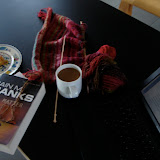 |
| What I did last weekend |
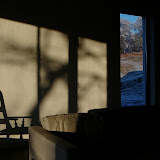 |
| 1 Jan 2009 |
Arty pictures
Sunday, February 08, 2009
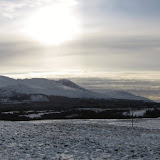
EPW in snow
First: getting there
(travel reports of snow and disruption however the roads were fairly clear all the way to the top of the drive)
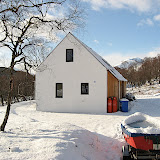
C&L spent the weekend (well Sat pm and Sun am) at the Wood in the snow.
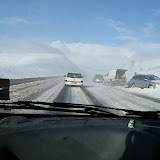 |
| Travel to EPW in the snow |
(travel reports of snow and disruption however the roads were fairly clear all the way to the top of the drive)
 |
| EPW in Snow |
C&L spent the weekend (well Sat pm and Sun am) at the Wood in the snow.
Monday, January 05, 2009
The house is real...
The next house along the glen (Poulary) is available to let all year round. I've been googling it to see what it says - and noticed on this page that it is now described as being the SECOND house on the left after the cattle grid. Which means that EPW (the first on the left) is real, it exists and has had an impact on others!
Sunday, January 04, 2009

Saturday, January 03, 2009
Happy New Year
 |
| New Year at EPW |
The weather was absolutely beautiful. Mostly. The house wasn't exactly warm all over, as the underfloor heating seems to be under the impression that it's 41degreesC outside (hmm - try -10degC instead). However the wood burning stove was most impressive and the thick insulation all over seems to be working. I didn't even have a hot water bottle on the third night. We were quite good at keeping the doors closed and recycling heat back into the Nibe though (e.g. leave bath water to cool down before emptying the bath). And not opening the bathroom window to clear condensation (just let the Nibe extractors suck it out of the air instead).
Subscribe to:
Posts (Atom)


 Posts
Posts


